Why Regular Sewer Lift Station Maintenance Prevents Costly Failures
A lift station moves sewage uphill when the terrain will not cooperate. When the pump fails, the sewage stops moving and the problems start fast.
August 20, 2026 · 3 min read
What a Sewer Lift Station Does
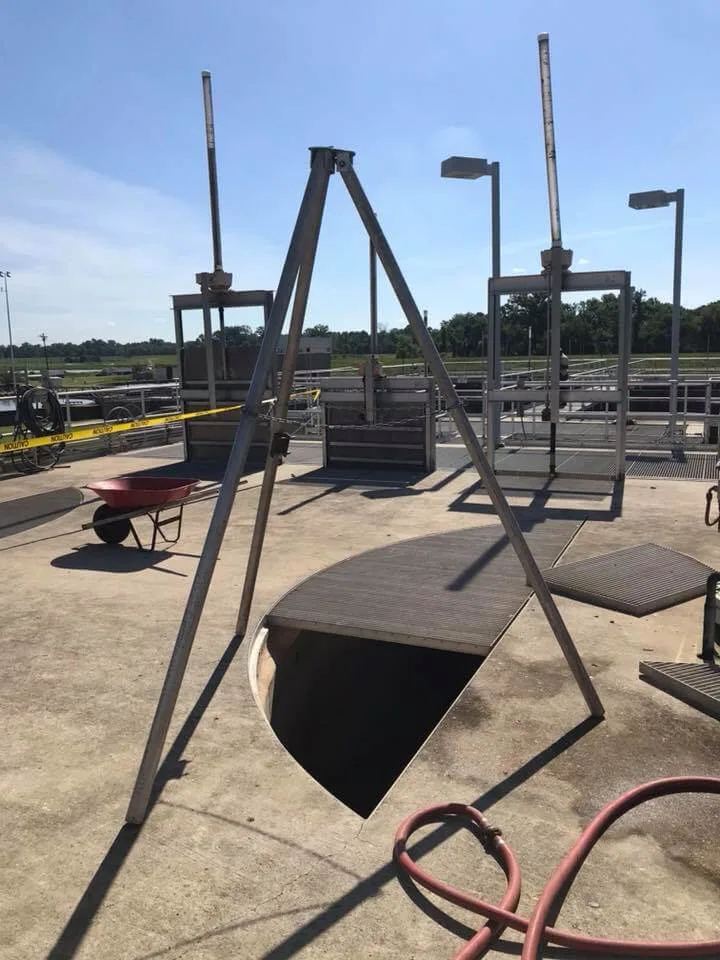
Gravity sewer systems rely on a continuous downhill slope from the source to the treatment plant or septic tank. When the terrain does not allow that slope (a subdivision built in a low area, a commercial building below the sewer main, a property where the septic tank sits uphill from the drain field), a lift station bridges the gap. Wastewater collects in a wet well, and when the level reaches a set point, one or more pumps activate and push the sewage uphill through a force main to the next gravity segment.
The system is straightforward: a tank, a pump, a float switch to trigger the pump, a check valve to prevent backflow, and an alarm to signal when the water level gets too high. Every component is critical. A failed pump, a stuck float, or a seized check valve turns the wet well into an overflowing holding tank within hours.
Common Failure Points
- Grease and debris wrap around pump impellers, reducing flow and eventually seizing the motor
- Float switches get tangled in accumulated debris and fail to trigger the pump at the correct level
- Check valves corrode or jam, allowing pumped sewage to flow back into the wet well after each cycle
- Electrical contacts corrode in the humid wet-well environment, causing intermittent pump failure
- The wet well itself accumulates sludge that reduces effective volume and shortens pump cycles
What Scheduled Maintenance Looks Like
A maintenance visit starts with a visual inspection. The technician checks the alarm panel, tests the float switches manually, and listens to the pump for bearing noise. The wet well is pumped down to inspect the walls, the pump intake, and the bottom for sludge accumulation. Debris wrapped around the impeller is removed. The check valve is cycled to confirm it seals. Electrical connections are tightened and corrosion is treated.
The entire visit takes one to two hours and should happen at least twice a year for residential stations, quarterly for commercial ones with higher flow. A station serving a restaurant or a car wash sees heavier grease loading and needs more frequent attention.
The Cost of Skipping Maintenance
A standard maintenance visit is a predictable, budgeted expense. An emergency failure is not. When a lift station pump fails, sewage backs up into the building it serves, the wet well overflows into the surrounding soil, and the owner faces an emergency pump-out, possible pump replacement, environmental remediation if sewage reaches a waterway, and potential fines from the local health department.
Pump replacement alone can run several thousand dollars. Add the emergency service call, the remediation, and the lost business (for a commercial property), and the total easily reaches five figures. Two or four scheduled maintenance visits a year are a small fraction of that cost and prevent the scenario entirely.
Signs Your Lift Station Needs Attention Now
- The high-water alarm is sounding or the alarm light is on
- The pump runs continuously without the level dropping
- You hear grinding, rattling, or no sound at all from the pump
- Sewage odor is present near the station or its vent pipe
- Water backs up into the building's lowest drain during heavy use
Lift Station Service in the Jackson Metro
Hillard's Septic Tank & Grease Trap Service maintains and services sewer lift stations for residential, commercial, and municipal clients across the Jackson, Mississippi metro area. The company is fully licensed and insured and has served the region since 1952. Call (601) 939-6666 to schedule a maintenance visit or to report a lift station alarm.
Hillard's Septic Tank & Grease Trap Service, (601) 939-6666
Call (601) 939-6666More articles
Five Signs Your Septic Tank Needs Pumping Before It Backs Up
A backed-up septic system ruins floors, yards, and weekends. Catching the early signs saves all three.
What Happens During a Commercial Grease Trap Cleaning
Grease traps keep fats, oils, and grease out of the sewer. Keeping the trap itself clean is the part most restaurant owners learn about the hard way.