What Happens During a Commercial Grease Trap Cleaning
Grease traps keep fats, oils, and grease out of the sewer. Keeping the trap itself clean is the part most restaurant owners learn about the hard way.
August 20, 2026 · 3 min read
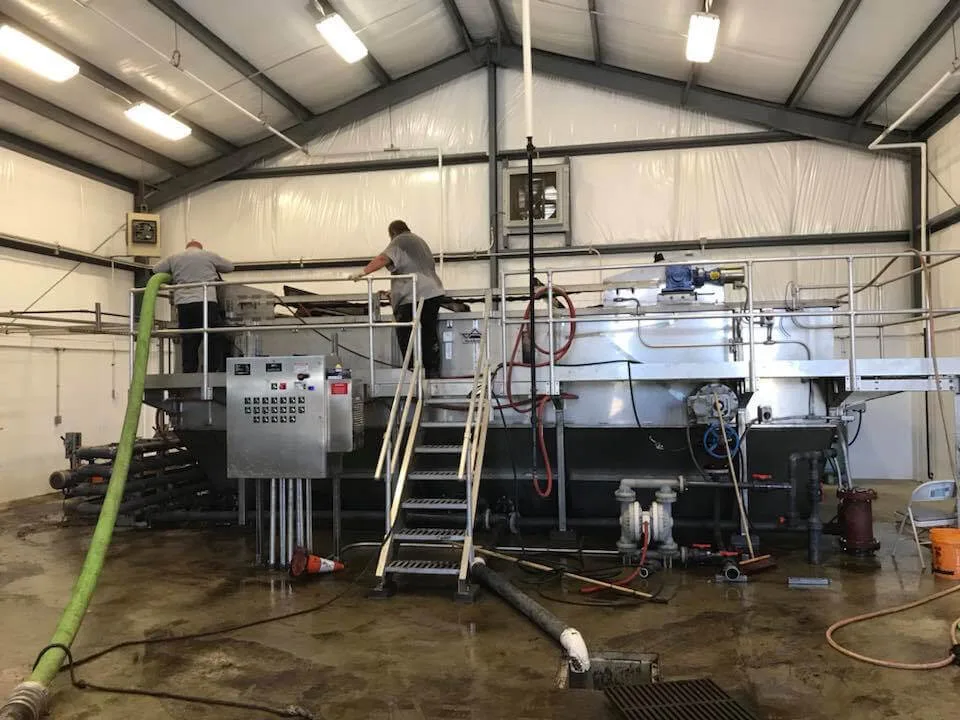
Why Grease Traps Exist
Every commercial kitchen produces fats, oils, and grease (FOG) as a byproduct of cooking. If that FOG enters the municipal sewer system, it cools, solidifies, and coats the inside of drain pipes. Over time, the buildup narrows the pipe until it blocks entirely. Grease traps intercept FOG before it reaches the sewer, holding it in a tank where it separates from the water and floats to the top.
The trap works passively. Water flows in from the kitchen drains, slows down inside the tank, and FOG rises to the surface while heavier food particles settle to the bottom. Cleaner water exits through an outlet pipe into the sewer. But the trap has a fixed capacity, and once the grease layer gets too thick, it stops separating effectively and starts pushing FOG downstream.
How the Cleaning Process Works
A vacuum truck crew arrives with a tank truck and a high-capacity suction hose. The crew opens the trap's access cover and inserts the hose. The truck's pump draws out the entire contents of the trap: the floating grease layer, the water in the middle, and the settled food solids on the bottom.
After the trap is empty, the crew scrapes the walls and baffles to remove any caked-on grease that the suction did not pull free. The inlet and outlet pipes are checked for blockages. Some crews run water through the system to confirm flow before closing the cover. The whole job takes 30 minutes to an hour depending on the trap's size and how long it has been since the last service.
How Often a Grease Trap Needs Service
The general rule is when the grease layer reaches 25 percent of the trap's total depth, it needs pumping. For a busy restaurant, that can mean every four to six weeks. A lower-volume kitchen, such as a church hall or a small cafe, might go 90 days between services. The only way to know for certain is to open the trap and measure the grease cap with a dipstick or probe.
- High-volume fryers and woks: service every 30 to 45 days
- Standard full-service restaurant: every 60 to 90 days
- Low-volume kitchen (break room, church, daycare): every 90 to 120 days
- New kitchens with no baseline: schedule a check at 30 days and adjust from there
What Happens When Cleaning Is Skipped
A neglected grease trap does not just overflow. The FOG that escapes downstream coats the building's own drain lines first, causing slow drains, backups, and foul odors in the kitchen. If enough FOG reaches the municipal sewer, the city issues a notice of violation. In most Mississippi municipalities, repeated violations carry fines and can result in a forced closure until the problem is corrected.
An emergency pump-out after a backup costs more than a scheduled one, and a health inspector visiting because of a grease complaint is a situation no restaurant wants. Regular scheduled cleaning is cheaper, cleaner, and keeps the inspector from having a reason to show up.
Choosing a Grease Trap Service Provider
Look for a company that operates its own vacuum truck fleet (not a broker sending subcontractors), carries current insurance, and provides a manifest or receipt documenting the volume pumped and the disposal destination. The manifest matters because the restaurant is legally responsible for proper disposal of the waste, even if a third party hauls it.
Ask whether they offer a recurring schedule. A provider who contacts you when service is due, rather than waiting for you to remember, prevents the missed-service scenario that causes most violations.
Hillard's Grease Trap Service for Jackson Metro Restaurants
Hillard's Septic Tank & Grease Trap Service has cleaned commercial grease traps across the Jackson, Mississippi metro area for decades. The company operates its own vacuum truck fleet, is fully licensed and insured, and is a member of the Rankin County Chamber of Commerce. Call (601) 939-6666 to set up a cleaning schedule or to get a same-week service call.
Hillard's Septic Tank & Grease Trap Service, (601) 939-6666
Call (601) 939-6666More articles
Five Signs Your Septic Tank Needs Pumping Before It Backs Up
A backed-up septic system ruins floors, yards, and weekends. Catching the early signs saves all three.
High Velocity Water Jetting vs. Traditional Drain Cleaning
A drain snake clears a path. Water jetting cleans the entire pipe wall. The difference matters when the blockage keeps coming back.