
Residential Septic Services

Preventative septic tank pumping and sewer lift station maintenance for homes across the Jackson metro.

Hillard's technician servicing a residential septic system
01

Septic Tank Pumping

A residential septic system collects all the wastewater your household produces. Solids settle to the bottom of the tank as sludge, lighter material floats as scum, and clarified liquid flows out to the drain field. Over time, sludge accumulates. When it builds past a critical level, solids push into the drain field lines and plug them. A field replacement is the most expensive repair a septic owner faces, and it starts with a tank that went too long without pumping.

Most homes need the tank pumped every three to five years, depending on household size and water usage. A family of four on a 1,000-gallon tank is closer to every three years. Fewer occupants or a larger tank extends the interval.

Hillard's pumps residential tanks across the Jackson metro, from standard 1,000-gallon concrete systems to larger fiberglass and poly tanks. The crew locates the access lid, pumps the contents, inspects the baffles and the tank walls, and notes anything that needs attention. The whole visit usually takes about 30 to 45 minutes.
02

Sewer Lift Station Service

Gravity moves wastewater in most systems, but not all lots slope toward the sewer main or the septic tank. A lift station uses one or two submersible pumps inside a wet well to push effluent uphill to the point where gravity takes over. When the pumps stop, wastewater backs up into the lowest fixtures in the house.

Regular maintenance catches problems before they cause a backup. Hillard's inspects the pumps, tests the float switches that tell them when to run, cleans the wet well of accumulated solids, and checks the check valves that prevent backflow. A station that runs continuously or cycles too frequently is usually a float-switch issue, not a pump failure, and a service visit catches that before the pump burns out.

Hillard's services residential, commercial, and municipal lift stations throughout Rankin County and the Jackson metro.

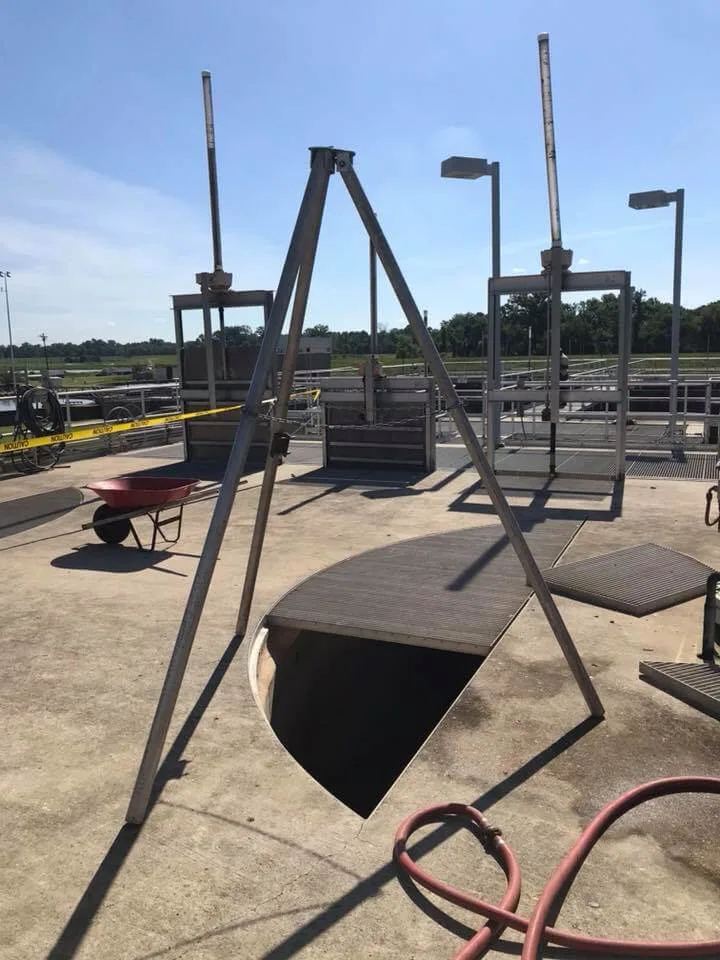
Industrial wastewater access hatch with treatment facility in background

What to Expect During a Service Call

1

Arrival and access

The crew arrives with the vacuum truck and locates the tank access lid. If the lid is buried, they may need to probe for it. Keeping the lid accessible saves time on every visit.

2

Pumping

A vacuum hose draws the contents of the tank into the truck. The crew works from one end of the tank to the other, breaking up the sludge layer so it pumps cleanly.

3

Inspection

With the tank empty, the technician checks the inlet and outlet baffles, looks for cracks or settling in the walls, and notes the condition of the tank floor.

4

Report

You get a plain-language summary of what they found: the sludge level, the condition of the baffles, anything that needs attention, and a recommended interval before the next pump.

Read more: 5 signs your septic tank needs pumping

Schedule Residential Service

(601) 939-6666

Or send us a message